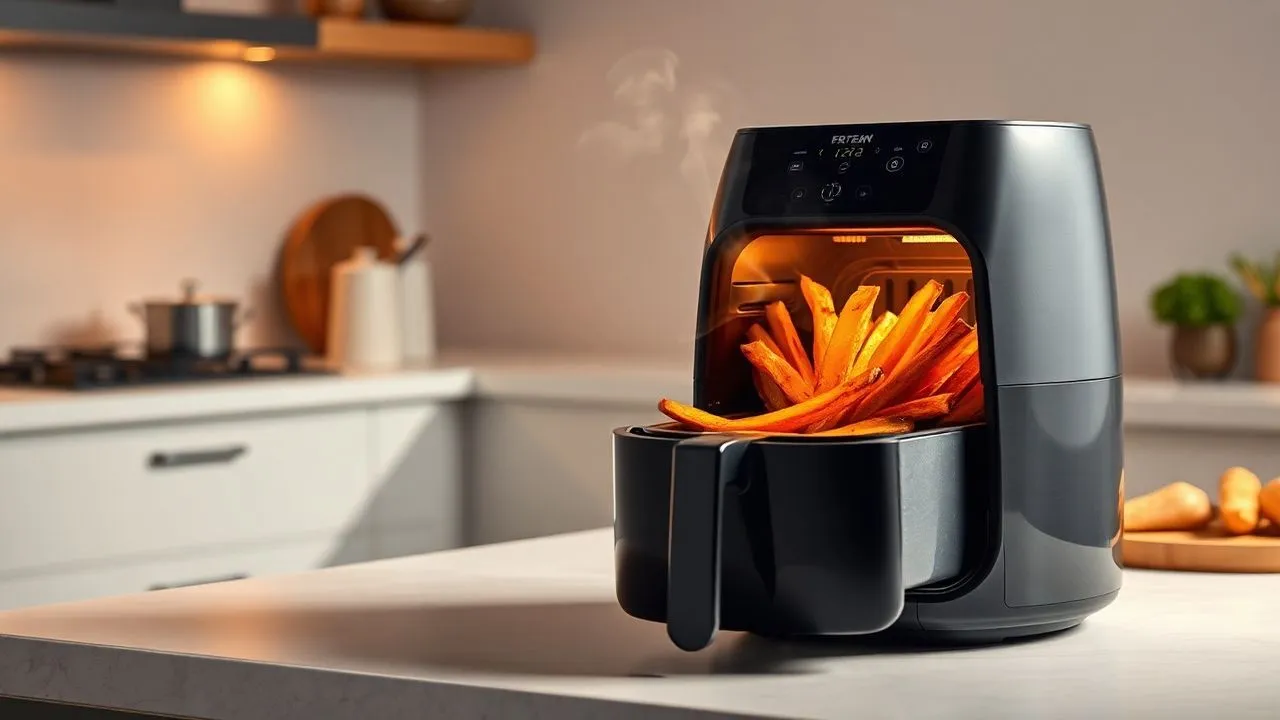
In the culinary landscape of 2026, food awareness reached unprecedented peaks, bringing millions of people to wonder how air fryer works and why this instrument has become the undisputed protagonist of modern kitchens. Despite the name it can deceive, suggesting a technological bracket linked exclusively to frying, this electrodomestic actually represents a refined evolution of forced convection technology. Its popularity is not the result of a passing fashion, but of the real ability to respond to a concrete need: to get the crispy texture and the satisfying taste of fried foods drastically reducing the intake of saturated fats and calories. Understanding its mechanism does not only serve to satisfy a technical curiosity, but it is essential to fully exploit its potential, transforming simple ingredients into gourmet dishes with a fraction of the oil required by traditional methods. In this guide we will explore every detail of its operation, analyzing how heat is distributed within the cooking chamber and what are the chemical-physical processes that allow us to obtain the perfect gilding we love so much. Whether you're a kitchen expert or a beginner, understanding how the air fryer works will allow you to cook more healthy, fast and efficient, improving your quality of life from the table.
The secret of technology: how the air fryer works
The principle of high speed forced convection
The pulsating heart of each air fryer lies in the principle of forced convection. Unlike a traditional ventilated oven, where the air circulates relatively slow inside a wide cavity, the air fryer uses a much more compact cooking chamber and an extremely powerful fan placed over a circular electrical resistance. When the appliance is turned on, the resistance emits an intense heat that is immediately captured by the air flow generated by the fan. This “tempesta” of heat is pushed down, wrapping the foods placed in the basket with a pressure and a speed that allow an almost instant thermal transfer. This mechanism explains how air fryer works in such an effective way: the rapidity of the air flow eliminates the surface moisture of the food in a few moments, creating a barrier that prevents the interior from drying too much, while guaranteeing an external crispness that closely resembles that obtained with the immersion in the boiling oil.
To optimize this process, the interior design of the modern fryers of 2026 is often characterized by shaped walls or star-shaped bases (such as the famous Starfish technology of some manufacturers) that help the air to bounce up after hitting the bottom of the basket. This continuous swirling motion ensures that every square centimeter of the food surface is affected by heat, eliminating the need to constantly turn food, although a small half-coating shake remains recommended for smaller cuts such as chips. The heat density generated is such that preheating times are minimized, often less than three minutes, making this tool incredibly energy efficient compared to a standard electric oven, which must heat a much larger air volume before being ready to use.
The reaction of Maillard and the chemistry of taste
One of the most fascinating aspects related to how air fryer works concerns food chemistry, specifically the famous reaction of Maillard. This reaction occurs when the sugars and proteins present on the surface of the food interact under the effect of intense heat (usually above 140°C), producing hundreds of different aromatic compounds and the typical brown-dorated color. In traditional frying, the oil acts as a uniform thermal conductor. In the air fryer, it is hot air at high speed to carry out this task. As the air is less dense than oil, the addition of a very small amount of fat (a spoon or a nebulized spray) becomes essential to catalyze the reaction homogeneously. The oil helps to distribute the heat on the irregular surface of the ingredients, ensuring that the gilding is uniform and that the taste is deep and complex, just like that of a classic fried.
In addition to crispness, hot air technology affects the health of the final dish. Since food is not immersed in a fat substance, there is no massive absorption of oil that characterizes frying in the pan. This means that the total calories of the dish can decrease up to 70-80%, but without sacrificing palatal satisfaction resulting from the crispy consistency. In 2026, temperature control algorithms became so precise that fryers are able to maintain a constant heat with wastes of just one degree, preventing the formation of harmful substances such as acrilamide, which tends to produce when starches are burned at excessive temperatures or for too long times. Understanding this balance between thermodynamics and organic chemistry is the key to mastering the use of its air fryer.
Traditional air fryer vs frying: differences
Fat reduction and health benefits in 2026
The comparison between air and traditional fry is not only a matter of taste, but it represents a conscious choice linked to long-term well-being. When we dip a food in the boiling oil, the porous structure of the food acts as a sponge, replacing the water that evaporates with the cooking fat. This process dramatically increases the calorie density of the meal. Analyzing how air fryer works, instead we notice that heat acts mainly by evaporation of the surface moisture without adding external fat matter if not at least part. This allows to maintain the original nutritional profile of the ingredients, better preserving some thermolabile vitamins that would be destroyed by the very high temperatures of the oil or by the prolonged cooking time of the traditional oven. For those suffering from high cholesterol or simply want to maintain weight shape in 2026, this electrodomestic has become an indispensable ally.
In addition, safety in the kitchen is a factor that is often underestimated but plays in favor of air technology. Managing pots filled with oil at 180°C involves significant risks of domestic fires, painful sketches and the problematic management of the disposal of exhausted oil, which is a highly polluting refusal if not treated properly. The air fryer completely eliminates these problems: the heat is confined inside an isolated and protected compartment, there are no boiling liquids that can overturn and cleaning only requires washing a basket, often compatible with the dishwasher. This “clean” approach to the kitchen has revolutionized the way families conceive to the preparation of fast meals, making “frying” a safe activity even in the presence of children or in small and slightly ventilated environments.
Home smell management and cleaning
Anyone who has fried fish or chips in the house knows the persistent smell that creeps into tissues, curtains and hair for whole days. This happens because the oil particles sprayed by heat disperse into the air, depositing on every available surface. The operation of the air fryer drastically minimizes this phenomenon. Since the amount of oil used is infinitesimal, there is no vaporization of fats that causes the typical “fried smell”. The air expelled from the back of the appliance often passes through filters to active carbons (in high-end models of 2026) that neutralize the strongest aromas before they spread in the room. This advantage is essential for those living in modern apartments with open-plan kitchen or open-plan, where air quality is an essential parameter for housing comfort.
Here is a summary of the main structural advantages of air fryer compared to classic methods:
- Absence of exhausted oil: You no longer need to worry about how to dispose of used fat, protecting the environment and home drains.
- Clean surfaces: No more splashes of fat on the stoves, tiles or the kitchen hood, reducing the time dedicated to deep cleaning.
- Thermal safety: The exterior walls of modern air fryers are isolated, reducing the risk of accidental burns during use.
- Versatile positioning: It can be used wherever there is an electrical outlet, even on a protected balcony if you want even more ventilation.
- Operating speed: The attainment of the operating temperature is almost instantaneous, saving valuable time during the preparation of lunches or quick dinners.
Types of air fryers available on the market
Single drawer and double basket models
The variety of models available in 2026 reflects the diversity of contemporary families' needs. The most common type remains the single drawer air fryer, appreciated for its compactness and simplicity of use. In these models, the basket is extracted frontally, making it easy to control cooking with a simple gesture. However, in recent years they have taken on the independent double basket versions. These appliances allow to cook two different foods simultaneously, setting different times and temperatures for each compartment. The “Sync Finish” function, now standard in 2026, ensures that both baskets finish cooking at the same instant, allowing to serve a full meal, such as chicken and chips, warm and ready at the same time without having to wait for the time of a second baked.
The choice between a single or double drawer model depends a lot on the available space on the work plane and the number of people for which it usually cooks. While a 4-litre model is ideal for a couple, families of four or more people should be oriented towards capacity over 7 liters or opt for the flexibility of the double basket. It is important to note that how air fryer works at air circulation level does not change between the two types, but the double compartment models require a more careful management of the absorbed electrical power, since the simultaneous use of two resistors can reach consumption peaks close to 2400-2800 Watt, an aspect to consider if you have other energetic appliances lit at the same time.
Furnace and Multifunction Air Fists
Another category in strong growth is that of oven air fryers (or air fryer ovens). These models aesthetically resemble a small microwave or an electric oven, but with the ventilation power typical of air fryers. The great advantage of this type is the volumetric capacity and the presence of internal shelves that allow to cook on multiple levels. Many of these models include accessories such as the roaster, perfect for cooking whole chickens evenly, and rotating baskets for chips, which automate the process of “shaking” eliminating the need for manual intervention during cooking. Although they occupy more space, their versatility makes them suitable to completely replace the traditional oven for most daily preparations.
Multifunctional fryers of 2026 often also integrate programs for drying, steaming or even bread leavening. In this case, understand how air fryer works means also to learn how to modulate the speed of the fan: to dry the fruit, for example, the appliance will use a low temperature and constant ventilation for many hours, while for frying it will use the maximum thermal and kinetic power. This technological convergence has transformed the air fryer into a real static kitchen robot, able to manage every phase of the thermal preparation of food with digital precision.
Here are the elements to be evaluated in the choice of the type that best suits your needs:
- Space in the kitchen: Evaluate external dimensions and need to leave back space for hot air discharge.
- Number of covers: Consider a capacity of at least 1.5 liters per person to avoid having to do more cooking cycles.
- Extra features: Check if you need specific modes such as grill, roast or food dehydration function.
- Easy cleaning: Check that the basket and accessories can be washed in the dishwasher and that there are no interstices difficult to reach.
Advantages and disadvantages of everyday use
Energy saving and running speed
One of the main reasons why millions of consumers have embraced this technology is time efficiency. In a hectic world like that of 2026, saving twenty minutes on the preparation of dinner is an invaluable value. As the cooking chamber of an air fryer is small and well isolated, the heat is concentrated directly on the food instead of dispersed in the air volume of a conventional oven. This results in reduced cooking times of 30-50%. For example, chicken thighs that would take 45-50 minutes in a classic oven can be ready in just 20-25 minutes in a air fryer, with a significantly crisper skin and a more juicy meat inside thanks to the rapidity of the process that seals natural juices.
Parallel to speed, energy saving is a determining factor. Although the instantaneous power of an air fryer is high, the reduced usage time and the absence of long preheating periods lead to a total consumption of kilowattora lower than the home oven. In an age of attention to energy costs and environmental sustainability, understand how air fryer works from the point of view of thermal optimization helps to reduce the carbon footprint of your home. It is an intelligent way of cooking that marries modern technology with respect for resources, without compromising on the quality of the final results.
Limits of capacity and portion management
However, there is no shortage of technical limits that it is good to know not to be disappointed after purchase. The main disadvantage is linked to physical capacity. As far as the models are becoming more and more capacious, the golden rule for perfect cooking is never overload the basket. If the food is too large, the air can not circulate freely and the result will be a soft and cooked mixture in a uneven way. This means that, for a dinner with many guests, the air fryer could turn out to be a bottleneck, forcing to cook on several occasions and to have to keep the first portions warm while the other cook. Those with a large family must therefore invest in XL models or accept this operational limitation.
Another aspect to consider is the physical encumbrance on the kitchen counter. Air fryers are appliances that require space, not only for their base but also to ensure proper ventilation during use. They cannot be recessed as an oven and must be placed away from heat-sensitive materials. In addition, there is a small learning curve: time tables provided by producers are often indicative and each food reacts differently according to freshness and cutting. It is necessary to make some initial experiment to perfectly calibrate the settings according to your personal tastes, learning about the “signals” that food sends during cooking, such as perfume or the degree of dour visible through the portholes of the most recent models.
How to use and maintain your air fryer
Temperature and time management settings
To get the most out of your equipment, it is essential to master temperature regulation, which usually ranges from 40°C (for drying) to 220°C (for extreme crispness). Most standard recipes for air fryer are between 180°C and 200°C. Understanding how air fryer works means knowing that lower temperatures are ideal for thick foods that need to cook well inside without burning out, like a meatloaf or cake, while high temperatures are perfect for thin cuts or frozen foods that require a thermal shock to become crisp. The use of a probe thermometer for food, in 2026, has become a common practice even among amateur cooks to ensure that meat reaches the internal temperature of safety without exceeding and becoming dry.
Time is the other crucial variable. A common mistake is to set too long times based on the experience with the traditional oven. As a general rule, it is recommended to reduce the furnace temperature by about 15-20°C and to shorten the cooking time by 20-30% when converting a classic recipe for the air fryer. Many modern models are equipped with humidity sensors that automatically adjust the remaining time, but visual monitoring remains the best weapon. Always remember to shake the basket half-cooking: this simple action ensures that all surfaces are exposed to the main air flow, avoiding thermal shade areas where food could remain pale or less crisp.
Ordinary cleaning and maintenance for long duration
Maintenance is a critical aspect to ensure that the device continues to work efficiently and hygienicly. Residues of fat or crumbs falling on the bottom or, worse, which are aspired towards higher resistance, can burn and produce annoying smoke or bad smells during subsequent cooking. After each use, it is essential to clean the basket and the grid removable with warm water and neutral soap. If the coating is non-stick, it absolutely avoids abrasive sponges or metal tools that could scratch it, compromising the ease of detachment of food in the future. Many users in 2026 use perforated silicone mats or specific oven paper for air fryer to facilitate cleaning, but you have to be careful not to cover too many holes, otherwise you hinder the air flow by vanifying the benefits of technology.
Periodically, it is advisable to also check the state of resistance and fan. Although they are protected by a grid, with time they can accumulate fat vapours. A delicate cleaning with a damp cloth (with a strictly switched and cold device) can prevent malfunctions. Follow these simple habits not only extends the life of the appliance, but also ensures that the taste of the dishes remains unaltered: a dirty fryer will tend to give a taste acre to everything that is cooked. The attention to detail is what distinguishes an occasional user from a real expert in air cuisine.
The air fryer is not only an electrodomestic, but a paradigm shift that allows to reconcile the desire for gastronomic pleasure with the needs of a healthy and balanced life.
Guide to the main brands and user manuals
Philips and Moulinex: technology excellence
The market of 2026 sees Philips still in a leadership position, thanks to the fact that he invented and perfected the original Rapid Air technology. Philips air fryers are known for the millimetre accuracy of air circulation, obtained thanks to a patented base design that creates a constant vortex. If you have a Philips model, the manual is essential to understand the default Smart Sensing programs settings, which use artificial intelligence to determine the ideal cooking. Recovering the digital instruction book from the official website is a quick operation: just enter the model code (usually start with HD) in the support section to have access to video tutorials and dedicated cookbooks that explain in detail how air fryer works of the dutch brand.
Moulinex, with its famous Easy Fry & Grill line, instead bet on the combined versatility. These models not only fry to air, but include a plate in die cast iron to grill meat and vegetables with the typical striations of the barbecue, but without smoke. To use these double functions, consult the Moulinex manual is essential, especially to understand when using the grid and when instead prefer the classic basket. On the Moulinex portal you can download quick guides that illustrate the proper maintenance of the grill plate, ensuring that the non-stick properties remain intact over time and that the device maintains its high energy performance.
Silvercrest, Koenic and Ardes: value and accessibility
For those looking for an excellent value for money without sacrificing technology, brands like Silvercrest (distributed by Lidl) and Koenic (brand owner of large electronic chains) represent excellent choices. Silvercrest fryers, in particular, became a cult phenomenon in 2026 for their robustness and simplicity of the user interface. Although less rich in advanced sensors than premium models, they offer solid and reliable cooking results. Recovering the Silvercrest manual is very simple through the Lidl service portal, inserting the IAN code on the plate of the appliance. This document is valuable because it contains specific cooking tables for the most common products sold in the chain supermarkets.
Ardes, proud representative of Italian design and engineering, offers models that stand out for aesthetics and ease of interaction. Many air fryer Ardes are designed for Italian cuisines, with programs optimized for dishes of our tradition that require a touch of delicacy extra. In case of lost paper, Ardes customer service is very efficient in providing PDF versions via email or via their website. Knowing how air fryer works of these brands allows to appreciate how, even with a limited investment, it is possible to bring in the table excellent dishes, healthy and ready in a few minutes, democratizing access to a technology that radically changed our way of staying in the kitchen.
Frequently Asked Questions about Air Fryer
Is it necessary to preheat the air fryer before use?
Although many models of 2026 are equipped with a quick heating function that makes preheating almost optional, doing so for 2-3 minutes guarantees a higher crispness from the first instant of contact between food and hot air. This initial thermal shock is essential for sealing the surface of food, especially for meat and breading, avoiding the internal moisture out and making food less appetizing than expected.
Can I insert glass or ceramic containers in the basket?
In principle, any container that is referred to as “safe for the oven” can be used inside an air fryer. However, it is essential to consider that solid containers block the airflow from below, slowing down the cooking of the base. To overcome this problem, it is recommended to use thin silicone molds or light aluminum pans, which lead the heat more quickly and allow the air to circulate better around the edges of the container.
Why does my air fryer produce white smoke during cooking?
White smoke is usually caused by the fat that, by casting on the bottom of the basket or on the resistance, vaporizes due to high temperatures. This often happens by cooking fat foods like bacon or burger. To solve, you can add a tablespoon of water on the bottom of the outside basket (under the grill) to keep the fat boiled at a lower temperature, or insert a slice of bread to absorb excess oil, ensuring that you do not move towards the fan.
What is the main difference between air fryer and ventilated oven?
The difference lies in the speed and density of the air flow. In an air fryer, the fan turns much faster and the cooking room is drastically smaller. This creates a “hot wind” effect that dries the surface of the food much faster than a ventilated oven, simulating the effect of boiling oil. The traditional oven is more suitable for large volumes and slow cooking, while the air fryer excels in rapidity and crisp texture.
Can you cook frozen food directly in the air fryer?
Of course, the air fryer is the ideal tool for pre-fried frozen products, such as chips, nuggets or fish sticks. It is not necessary to deflate them in advance; indeed, to put them in the basket still frozen allows to obtain a better crispness. The intense heat instantly vaporizes surface ice crystals and activates the oils already present in the industrial panatura, leading to results often higher than those obtained with the traditional oven in half time.
In conclusion, understanding how air fryer works is the first step to radically transform your food routine, bringing tasty but light dishes to the table. This electrodomestic, thanks to its forced convection technology, represents the perfect synthesis between energy efficiency, operational speed and nutritional well-being. If you want to explore new frontiers of taste and optimize your times in the kitchen, just put these tips into practice and experiment with your air fryer. Are you ready to revolutionize your meals? Start cooking in a healthier way and find out how this little tool can make a big difference in your daily life.


