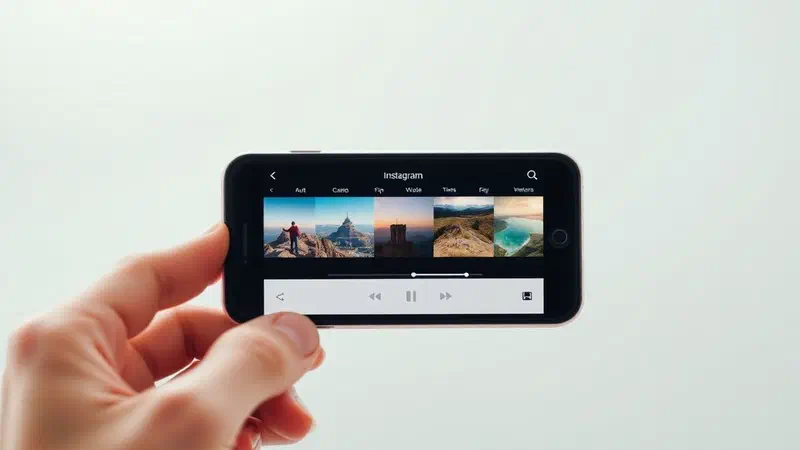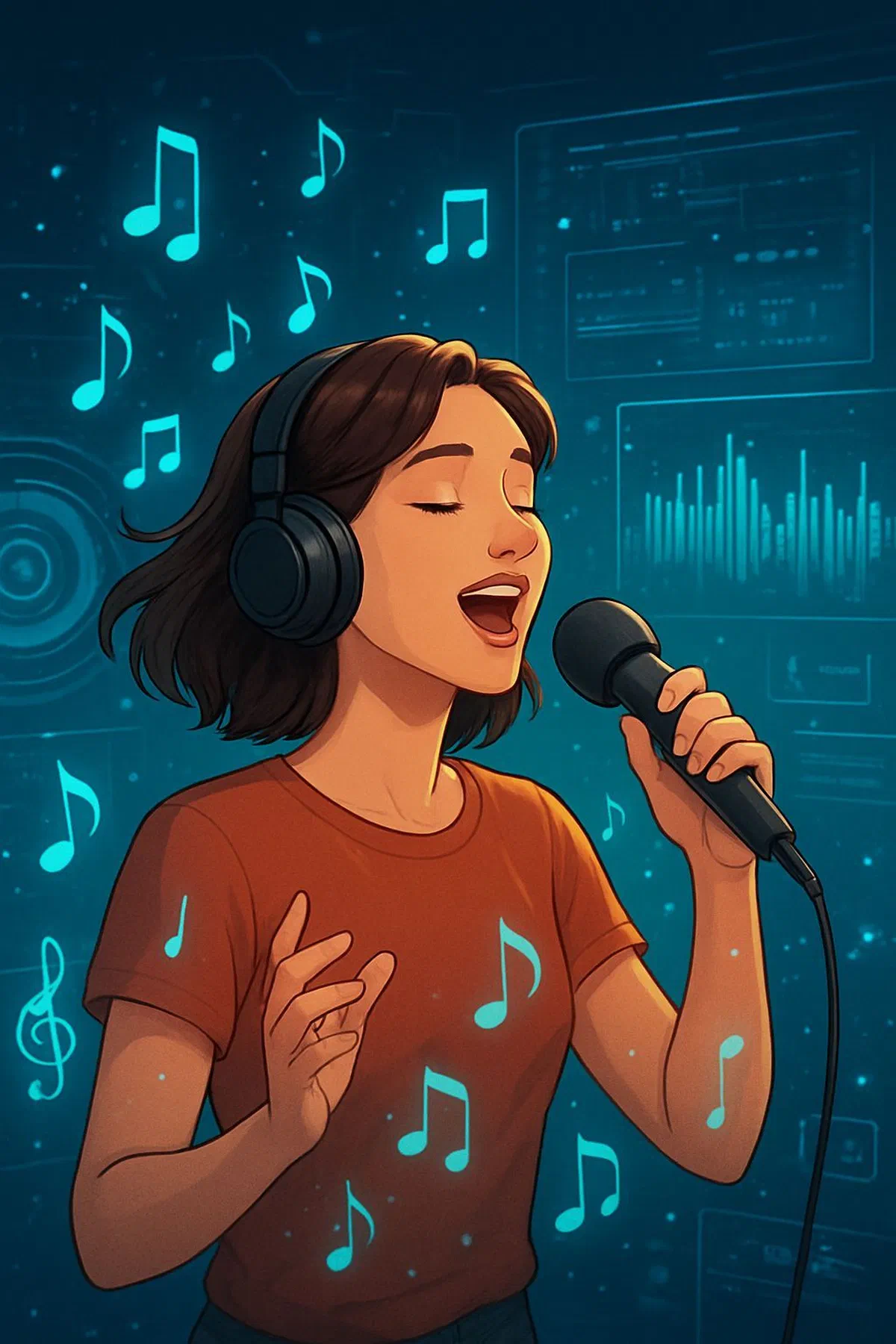
In the digital age in which we live, where reality merges more and more with imagination thanks to the technological tools at our disposal, a fascinating and fun phenomenon has captured the attention of millions of users: the ability to make cantare and speak the photos. what until a few years ago seemed a scene worthy of a science fiction film or an enterprise that can only be realized by graphic and animation experts with complex and expensive software, is now within reach, thanks to innovative applications based on** artificial intelligence (ai)*** and cloud computing*. imagine taking an old family photo, a selfie, or even the image of a historical character, and seeing her animated, moving her lips in perfect sync with a song or speech, expressing emotions and life. it’s not just a funny pastime to tear a smile or create viral content on social media, but the tip of the iceberg of a technology that is redefining the boundaries between static image and dynamic content. this article will not limit itself to listing the best apps to animate your photos, but will embark on a deeper journey, exploring the sophisticated technologies that make this magic possible, the multiple applications that go beyond mere fun, the crucial ethical implications and privacy that every user should consider carefully, and a look at the future prospects of this rapidly evolving field. prepare to discover how ai is giving a new voice and a new face to our images, transforming them into real digital protagonists, and understanding the vast potential – and the responsibilities – that result.
The rise of facial animation: from curiosity to global phenomenon #
The evolution of facial animation, from niche art to a mass phenomenon accessible via smartphone, is one of the most exciting and rapid chapters in the history of digital technology. for decades, animated a face meant hours of meticulous work by professional animators, who designed each frame or manipulated 3d models with surgical precision. prohibition costs and specialist skills made this ability a luxury for high-level film or advertising productions. however, the advent and rapid progression of artificial intelligence***, in particular the techniques of machine learning* and the deep neural networks***, radically democratized this process. the real breakthrough came when the computing power needed for such complex processing has become available not only on supercomputers, but also through scalable cloud computing*** services, allowing mobile apps to exploit remote computational resources to perform sophisticated algorithms in seconds. this eliminated the entry barrier for the average user, transforming a complex activity into a simple ‘tap’. apps like wombo, which have gained almost instant viral popularity, have become emblematic of this revolution, demonstrating how advanced technology can be packaged in an intuitive and fun user interface. they exploited the innate human desire for creativity and sharing, allowing anyone to turn a static photo into a humorous music video, generating a wave of content on social media and triggering new trends. this not only generated entertainment, but also opened the eyes of the public on what it is possible to do with ai, triggering a widespread curiosity and pushing developers to explore new frontiers, making facial animation no longer a technological curiosity but an integral component of our digital ecosystem, able to influence the culture of memes, personal branding and daily visual communication.
The technological heart: how artificial intelligence gives voice to images #
Behind the magic of the photos singing there is a complex architecture of algorithms of ** artificial intelligence***, working in synergy to transform a two-dimensional static image into a dynamic three-dimensional animation. the process begins with the relevation of face reference points* (facial landmark detection), where the ai accurately identifies tens or hundreds of key points on the face – such as the corners of the eyes, the lip contour, the tip of the nose and the jaw line – to build a digital ‘map’ of the face. this map allows the system to understand the structure and facial geometry of the subject. subsequently, they come into play techniques of map of expressions and emotions, where the ai, trained on vast datasets of videos of people who speak and sing, learns to correlate specific facial movements (eg lips moving, eyebrows rising) to certain expressions or phonemes. the true generator of many of these applications is the generative adversarial networks (gans), a class of neural networks where two networks (a ‘generator’ and a ‘discriminator’) challenge each other: the generator creates new images or animations trying to make them indistinguishable from the real ones, while the discriminator tries to understand whether an output is real or generated by the ai. through this iterative process, the generator becomes incredibly skillful in creating realistic and consistent facial animations. for the ‘canto’ or ‘parlato’, the ai performs an*** audio analysis**** to break the sound track into phonemes (the minimum sound units that distinguish one word from the other) and analyzes the tone, rhythm and intonation. this audio data is then synchronized with the facial movements generated through a process known as lip-syncing*, which associates each phoneme with a specific shape of the mouth and other natural facial expressions. finally, everything is enriched by motion transfer** or style transfer** techniques, which apply movements and styles from a source video (for example, a dancer or a singer) to the face of the target image. the entire process, intensive from the computational point of view, is managed on powerful cloud servers, ensuring that even users with less performing devices can enjoy rapid and high quality results, underlining the importance of the underlying technological infrastructure that supports this fascinating user interface.
Beyond simple fun: practical and creative applications #
While the playful function of making the photos sing is undoubtedly the most known, the potential of the** face animation based on ai**** extends far beyond simple entertainment, opening innovative scenarios in many sectors. in the field of marketing and advertising, these technologies offer new opportunities to create highly engaging and personalised content: an animated corporate logo that ‘parla’ to the customer, a virtual testimonial that presents a product, or the reanimation of historical characters for promotional campaigns can capture attention in previously unthinkable ways. education and training**** can benefit enormously from these innovations; imagine history lessons in which figures of the past ‘remember’ their own era, or e-learning modules where interactive avatars explain complex concepts more empathetic and memorable. accessibility**** may also be improved: people with communication difficulties could use expressive avatars to translate thoughts more understandable, or ai interfaces could provide animated and more human responses for individuals with hearing or visual disabilities. in the world of digital art and content creation***, artists can experience new forms of expression, creating surreal animations, creating static illustrations or even making music videos with unusual protagonists. for content creators, this technology is a gold mine to produce unique and viral material. in addition, in the context of personalization and storytelling*, facial animation offers touching ways to preserve memories, such as giving ‘voice’ to old photographs of ancestors, creating animated and personalized birthday greetings, or developing immersive digital stories. virtual assistant************** are becoming more and more human with animated faces that make interaction more natural and engaging. this ability to instill life in static images is not only a demonstration of technological skills, but a powerful tool that is redefining the way we interact with digital, creating new forms of narrative, communication and even emotional connection, demonstrating that the boundary between reality and fiction is increasingly blurred and unlimited creative opportunities.
A thorough comparison of the leading platforms: wombo, reface and talkr under the lens #
The ecosystem of applications to animate and make the photos sing is rich and constantly expanding, but some platforms have distinguished themselves by popularity, quality and functionality. a detailed comparison reveals the peculiarities of each, helping users to choose the most suitable tool for their needs. wombo, for example, has become a viral phenomenon due to its extreme simplicity of use and the surprising quality of its lip-sync*. its strength lies in a vast library of preloaded folk songs, where ai excels in synchronizing the labial movements of the subject with the chosen track, offering humorous and often hilarious results. the intuitive interface and rapid processing make it ideal for those looking for immediate fun without too many customizations, although its focus is almost exclusively on singing and does not allow the use of personalized audio in the free version. reface*, on the other hand, offers a broader and more sophisticated approach, not limited to singing alone but extending to the face-swapping (deepfake)** and to the reproduction of speeches from scenes of famous films or memes. its artificial intelligence technology is exceptionally advanced in combining faces and transferring expressions and movements from source video with remarkable realism. this makes it extremely versatile for those who want to explore the creation of more complex and varied content, although removing watermark and full access to the library require a premium subscription. finally, talkr* (and similar apps such as tokkingheads, especially in the ios version), stands out for its ability to give a more creative**************. unlike previous ones, talkr allows you to use your voice or any custom audio file as the basis for animation. although the results may not always be fluid or hyperrealistic as those generated by wombo or reface’s default libraries, this feature opens endless possibilities for personal storytelling, creating unique messages and authentic expression. its technology focuses more on accurate sound mapping tailored to face movements, making it a powerful tool for those who value customization and originality. other apps like face dance and avatarify offer variations on these themes, with different effects bookcases and songs or slightly different algorithms, contributing to a dynamic market where choice often depends on the desired balance between ease of use, result quality, customization options and cost.
The challenge of privacy and ethical implications in the deepfake era #
The magic of making the photos sing, although fun and innovative, raises issues of privacy and ethical implications that each user and developer has to deal with seriously. the warning of the original article on privacy*, regarding the fact that uploaded photos end up on remote servers and the processing of data is not always transparent, is more than ever present and deserves a significant expansion. when you upload an image on these applications, you are relying on a sensitive biometric data – the image of your face or that of others – to a cloud service. although many developers reassure about deleting files after processing, the lack of direct control by the user and the complexity of privacy policies make it difficult to verify. this opens the door to potential abuses: biometric data could be used to further train artificial intelligence models without explicit consent, or worse, end up in wrong hands. the problem is amplified when we consider the rise of deepfake*, multimedia content altered with ai to make a person say or do things he never said or done. if, on the one hand, the ludic animation of the photos is relatively harmless, the same technology, if used with malicious intent, can generate misinformation and fake news with faces of public characters, create non-consensual content** (for example, deepfake pornographic) that severely violate the privacy and dignity of people, or facilitate truffes and fraud through video call impersonation. legislation** is tiringly trying to keep pace with these technological developments, with countries introducing specific deepfake laws to protect citizens, but the global diffusion of technology makes uniform control difficult. it is essential that users exercise an informed consent****, carefully reading privacy policies before using these apps, and avoid uploading third-party photos without their explicit permission. responsibility does not only apply to developers, who must implement robust security measures and transparency policies, but also to users, who must be aware of risks, promote ethical and responsible use of technology and develop a critical sense of content generated by ai. the balance between innovation and protection is delicate, and awareness is the first step to navigate safely in this new digital age.
Best practices and advice for higher quality creations #
To transform a simple shot into a high-quality facial animation that captures attention and genres smiles, it is essential to follow some best practices* that go beyond simply uploading a photo. the selection of the ideal photo is the first and most crucial step: opt for high resolution images, with good lighting and sharp focus on the subject’s face. neutral facial expressions are often preferable, as they offer ai a more flexible basis on which to apply animations, avoiding distortions or unnatural results. make sure that the subject looks straight in the room or is slightly angled, with open eyes and well visible, helps the ai to accurately detect facial landmarks. a simple or even background can also help improve processing, reducing distractions for the algorithm. for applications that allow**********custom audio optimization, such as talkr, recording quality is just as important as image quality: using a good quality external microphone, if available, and recording in a quiet environment, without background noise, ensures clear and clean audio. speaking or singing in a clear and rhythmic way will facilitate ai in accurately synchronizing labial movements. don’t be afraid of ** experience and be creative**; try different songs, effects, or combinations of text and images. sometimes the most unexpected results are also the most fun. however, it is also important to maintain ** realistic expectations**: not all photos or audio will produce a perfect or hyperrealistic result, since technology, although advanced, still has its limits. understand that these apps are ai processing tools, not magic, helps manage disappointments and appreciate successes. finally, and perhaps the most important advice, is to always consider the ** ethical and privacy implications** before sharing. ask yourself if the content is appropriate, if it respects the dignity of the subject (especially if it is not you), and if you have the consent to publish it, especially on social media. a conscious and responsible use of these powerful technologies not only ensures safe fun, but also contributes to shaping a more ethical and respectful digital future for all.
The animated future: future prospects and innovations #
The journey of facial animation through ai has just begun, and the future promises even more stunning developments that will further transform our relationship with digital images and media. one of the main directions is the attainment of a **** increasing realism, where animations generated by ai will become indistinguishable from the real ones, with facial expressions, eye movements and labial synchronization so natural to challenge human perception. this research of realism will open new frontiers for the film industry, video games and even the creation of digital avatars for the metaverse. the**** real-time integration** is another imminent milestone: the ability to animate faces during video calls, live streaming] or virtual interactions, radically transforming digital communications and live entertainment. imagine you can change your expression or virtual personality in real time, or interact with ai characters that respond dynamically. the expansion in the ambients of virtual reality (vr) and augmented reality (ar)* is inevitable, with the creation of hyperrealistic and interactive avatars that populate digital worlds and reflect our expressions in ways never seen before. advanced customization* will go beyond the simple choice of a song, offering granular control over every aspect of the animation, from the subtle shade of a smile to the tone of the synthesized voice, allowing unprecedented creativity. we are also witnessing the emergence of the*ai multimodal generation, which will combine text, images, audio and video to create complex content from simple inputs, such as generating an entire music video describing it in words. at the same time, there will be an acceleration in the development of deepfake detection and countermeasures, crucial to mitigating ethical risks and the spread of disinformation. these tools will help to distinguish real content from those generated by ai, creating a more secure and transparent digital ecosystem. the cultural impact of these innovations will continue to be profound, shaping new forms of entertainment, communication and art, but also putting continuous challenges to our understanding of truth and trust in the digital world. the animated future is not only technologically brilliant, but also requires constant ethical dialogue and increasing awareness to be navigated wisely.
Conclusion: the harmony between technology, creativity and responsibility #
The journey into the fascinating world of applications that make photos sing has led us through a panorama of technological innovation, unlimited creativity and deep ethical considerations. we have explored how artificial intelligence****, especially through complex algorithms such as gans and neural networks, has democratized the**** face animation**, transforming a complex and costly enterprise into a fun accessible to anyone with a smartphone. apps like wombo, reface and talkr have shown that technology is not only a tool for serious tasks, but also an inexhaustible source of joy and new forms of expression. beyond pure entertainment, we have discovered how these technologies are finding revolutionary applications in marketing*,**** education**,*** accessibility*** anddigital art, opening unexplored horizons for communication and storytelling. however, every innovation brings with it responsibility. the discussion on the privacy**, the processing of sensitive data and the potential for abuse related to malignant deepfake reminds us of the importance of a critical and conscious approach. it is essential that each user adopts best practices, from accurate selection of images to full understanding of privacy policies, acting with ethics and respect for themselves and others. the future promises further advances, with more and more realistic animations, real-time integration and immersive virtual environments, but also with the need to develop effective countermeasures to counteract the improper uses. the age of facial animation ai is a witness of the transformative power of technology. as we embrace the wonders that these innovations offer, we must do so with a strong sense of responsibility, cultivating a balance between the desire to create and the wisdom to protect. only then can we ensure that the animated future is a bright, creative and safe future for all.