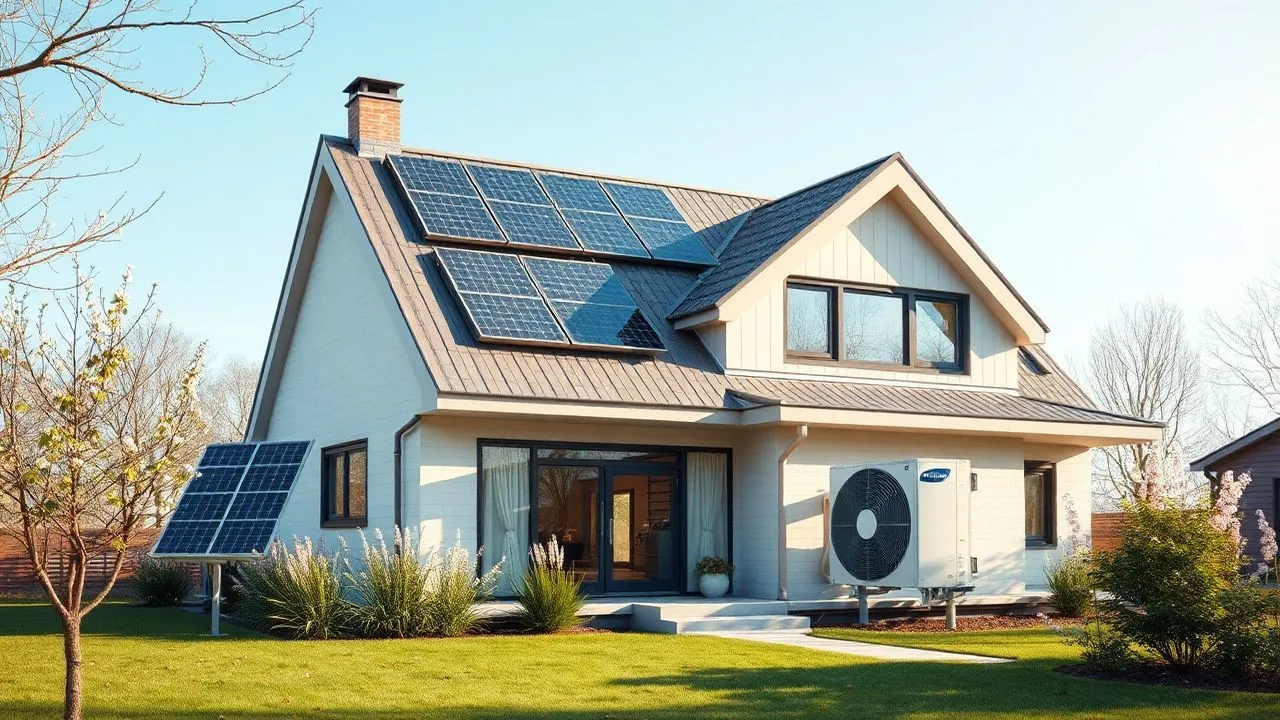
The panorama of state incentives for energy requalification has undergone a radical transformation with the entry into regime of the Thermal Account 3.0 during this 2026. Many citizens and entrepreneurs, accustomed to the complexity of tax deductions spread over ten years, are today faced with a profoundly different and far more immediate opportunity. The Thermal Account 3.0 is not a tax deduction, but a real contribution in the capital account provided by the Energy Services Manager (GSE) through bank transfer. This instrument, governed by the D.M. 07/08/2025 and operating from 2 February 2026, aims to support the ecological transition through the replacement of obsolete plants with high efficiency systems and the integration of renewable thermal sources. Compared to previous versions, the new decree expands the audience of beneficiaries and includes technologies previously excluded, such as photovoltaics for specific sectors. Understanding how to navigate between technical requirements and bureaucratic procedures is essential not to lose the right to reimbursement, which in many cases can cover up to 65% of the expenditure incurred. In this in-depth analysis, we will explore every technical, operational and economic detail to allow you to manage your practice successfully and get the maximum economic benefit for your property or your professional activity.
What is the Thermal Account 3.0 and the novelties of decree 2025
Structural differences compared to version 2.0
The evolution from the previous scheme to the Thermal Account 3.0 marks a turning point in national energy policies of 2026. While the Thermal Account 2.0 concentrated almost exclusively on heat heating, version 3.0 introduces the concept of global energy requalification, allowing the integration of electrical production systems from renewable sources in specific contexts. One of the most important news is the inclusion of photovoltaic systems combined with storage systems, but exclusively for the tertiary sector and public administrations, provided that the installation is contextual to that of an electric heat pump. This synergy between thermal and electrical is a concrete response to the need to electrify consumption, drastically reducing the dependence on methane gas and the most polluting fossil fuels such as oil or coal, still present in many rural or obsolete industrial realities.
Another fundamental aspect of the new decree concerns the raising of the quality standards required for equipment. To access incentives in 2026, a generic certification of efficiency is no longer enough, but it is necessary that the generators comply with stringent environmental criteria, such as those defined for air quality in the case of biomass boilers. Moreover, the Thermal Account 3.0 has expanded the catalog of pre-qualified devices, a list managed directly by the GSE that allows applicants to select models of heat pumps, boilers or solar collectors already verified from the technical point of view. This mechanism greatly reduces the time of inquiry and minimizes the risk of rejection of the application for technical reasons, offering greater safety both to the installer and to the final customer, which can accurately calculate the amount of the transfer before even starting the work.
The new threshold of EUR 15,000 for the single payment
The real economic revolution of the Thermal Account 3.0 lies in the delivery threshold of the contribution in one rata. If the direct accreditation in a single solution was limited to amounts of up to 5,000 euros, the new decree raised this roof to 15,000 euros. This means that the vast majority of residential interventions, such as replacing an old boiler with a medium-sized air-water heat pump for a single-family house, will benefit from an integral refund within a few months from the end of the work. For the private citizen, this results in a return of the very fast investment, eliminating the ten-year expectation typical of Ecobonus and ensuring an immediate liquidity that can be reinvested in further improvements of the property or to cover the initial financing costs of the work.
In addition to the increase in the threshold, the decree of 2025 introduced greater flexibility in the management of the accessory expenses. Now they are fully refundable, always within the expected percentages, also the costs related to professional design, ante and post-operam energy diagnosis and the drafting of the Energy Performance Certificate (APE). This political choice aims to encourage quality planning, avoiding incentives being spent for oversized or poorly designed plants that would not lead to real energy saving. For enterprises and public administrations, where the amounts often exceed 15,000 euros, the dispensing remains divided into annual rates (from two to five depending on the type of intervention), but with revaluation coefficients that make the instrument extremely competitive compared to any other form of facilitated financing.
Who can request GSE incentives: eligible beneficiaries
Private, condominiums and management in the residential sector
In 2026, the audience of private beneficiaries has been consolidated including not only individual property owners, but also tenants and tenants, provided they actually support expenses and have the owner's consent. The condominiums play a central role in the Thermal Account 3.0, especially as regards the centralization of thermal installations. The legislator has provided increased incentives to replace old centralized systems with hybrid systems or high-power heat pumps, also favoring the adoption of Building Automation systems for intelligent heat control. These interventions allow a fairer distribution of consumption and a drastic reduction of average condominium costs, making the building more attractive on the real estate market and improving the energy class in line with the European directives on green houses.
For the private citizen, access to incentives is facilitated by the possibility of acting through a CEO, typically a qualified technician or a specialized company (ESCo). This allows those who do not have technical or bureaucratic skills to delegate the entire management of the practice on Portaltermico 3.0, ensuring the correctness of the documentation sent. It is important to note that the Thermal Account 3.0 is only applicable to existing and stacked buildings, equipped with pre-existing heating system. It is not possible to request the incentive for new constructions, except for solar thermal, since the purpose of the fund is to replace the park obsolete and polluting machines with modern technologies. The cumulation with other incentives is limited: the Thermal Account cannot be added to tax deductions for the same intervention, but it is possible to integrate it with regional or municipal contributions, after checking the maximum limits of aid intensity.
Public Administrations and Third Sector Entities (ETS)
The Public Administrations continue to be the privileged subjects of the Thermal Account 3.0, being able to access a wider range of interventions that also includes the thermal insulation of the building enclosure and the replacement of the fixtures. A fundamental novelty of 2026 is the total equalization of non-economic Third Sector Entities (ETS). Volunteering associations, foundations, parishes and ONLUS enrolled at RUNTS can now benefit from the “booking” procedure. This mode allows you to block the funds before the start of the yard, presenting a quote and a preliminary project. Once approved by the GSE, the agency can proceed to work with the certainty of the contribution, receiving even a welcome at the beginning of the activities, vital element for organizations that often operate with limited budgets.
The list of subjects allowed for the public and social sector in 2026 includes:
- Municipalities, Provinces and Regions for the efficiency of schools and public offices.
- Autonomous Institutes Popular Houses (IACP) and their successors to public housing.
- Local Health Companies (ASL) and Hospital Facilities.
- Third Sector (ETS) members of the National Single Register (RUNTS).
- Household companies that manage public services on behalf of local authorities.
For these subjects, the incentive can cover up to 100% of expenditure in specific cases, such as the construction of almost zero energy buildings (NZEB) or interventions in municipalities affected by seismic events. Moreover, the Thermal Account 3.0 fully finances the preventive energy diagnosis, which becomes mandatory for PAs to demonstrate the effectiveness of the proposed intervention. This results-based approach ensures that public resources are allocated into projects that generate maximum energy savings and greater CO2 emissions reduction possible, transforming public real estate into a sustainability model for the entire country.
Refunds and incentives
High efficiency heat pumps and hybrid systems
Heat pumps represent the technological heart of the Thermal Account 3.0 in 2026. These devices, capable of extracting heat from air, water or ground to transfer it into buildings, are encouraged with percentages varying according to seasonal efficiency (SCOP) and the climatic zone of installation. The calculation mechanism is not based on total expenditure, but on the estimated thermal energy produced by the generator. This means that in colder areas, such as the E and F zone (Alps and Apennines), the contribution will be proportionally higher than the A or B zone (Meridian Coasts), to compensate for the greater heating requirements. Electric heat pumps, if selected from the GSE catalog, ensure a simplified access procedure and certain refund times.
In addition to pure heat pumps, the Thermal Conto 3.0 enhances hybrid systems, i.e. devices that integrate in a single product an electric heat pump and a gas condensing boiler support. This solution is particularly suitable for redevelopment of existing buildings with traditional radiators, where the heat pump alone may not be enough during extreme cold peaks. The decree 2025 imposes however that the heat pump part is dimensioned to cover at least 60-70% of the annual thermal load, avoiding that the gas boiler becomes the prevailing generator. The logic of 2026 is clear: to encourage technologies that lead to a real abandonment of fossil fuels, while at the same time a gradual and technically sustainable transition also for less modern homes.
Biomass boilers and solar thermal collectors
For non-Metanized areas and farms, the transition to modern biomass is strongly supported. Pellet calves, wood or wood chips can receive consistent incentives, provided they meet the most stringent emissions requirements, usually identified with the 5 star environmental classification. The Thermal Account 3.0 particularly rewards the replacement of old open fireplaces or outdated stoves with new low-emission models and high-performance. It is mandatory, to obtain the refund, to install also a properly dimensioned thermal accumulation system (puffer) that allows the boiler to work at constant regimen, reducing the ignition cycles and shutdown that are the main cause of pollution from thin powders.
The main incentives for renewable heat production are:
- Replacement of heat generators with air-air, air-water or geothermal heat pumps.
- Replacement of existing plants with biomass boilers (pellet, wood, wood) high efficiency.
- Installation of thermal solar collectors for the production of sanitary hot water or heating integration.
- Replacement of electric water heaters with heat pump water heater (PDC water heater).
- Installation of solar cooling systems for summer cooling through solar energy.
- Construction of compact hybrid systems that combine different renewable technologies.
The thermal solar, in particular, sees a renewed attention in 2026 thanks to the possibility of encouraging also large plants for industrial processes or district heating. The surface of the collectors is valued with a fixed contribution to the square meter, which increases if the system is equipped with remote performance monitoring systems. This technology remains one of the simplest and most effective to break down the costs of the domestic energy bill, especially when combined with the replacement of old energetic electric boilers, transforming the free energy of the sun into hot water that can be used for sanitary uses, washing machines and dishwasher, reducing the overall load on the national electricity network.
News for companies and the tertiary sector in 2026
Photovoltaic with accumulation and charging columns
One of the historical demands of the production sector was finally accepted in the Thermal Account 3.0: the possibility for companies of the tertiary to encourage photovoltaics. However, it is necessary to pay attention to constraints. In 2026, a company may request a GSE refund for a photovoltaic system only if it is assigned to a heat pump installed at the same time. The goal is to create self-sufficient buildings where the electricity produced by the roof directly feeds the winter and summer air conditioning system. The contribution also covers the installation of storage systems (battery), which are fundamental to shift daylight solar production to the evening or morning hours, when the demand for heating or cooling is greater, maximizing the company’s energy consumption.
In addition, decree 2025 introduced incentives for the installation of charging columns for electric vehicles within the company's or buildings used for tertiary use (offices, hotels, shopping centres). This measure aims to create a capillary charging infrastructure at workplaces and prolonged rest. Also in this case, the colonine must be part of a larger redevelopment project that includes the thermal sector. For a hotel, for example, switch from diesel to heat pump, install photovoltaic on the roof and offer charging points for customers becomes a package of coordinated interventions that can be financed almost entirely by the Thermal Account 3.0, drastically improving the competitiveness and the green image of the structure on the international market.
Efficientization of wrapping and solar screens
Businesses and farms in 2026 can access incentives for the so-called “passive isolation”. This includes the external or internal thermal coat, the insulation of the roofs ( roofs) and the replacement of the locks with the latest generation thermal cutting models. The necessary condition is that the intervention leads to a certified energy saving of at least 10% compared to the starting situation. This limit is easily accessible through proper technical design. A well-insulated building drastically reduces the necessary load for heating, allowing to install heat generators (heat pumps) of lower power, with a double saving: on the purchase of the plant and on future operating consumption.
A further opportunity for the tertiary is represented by sunscreens and shading systems. In a context of increasingly towering summers, reducing the heat that enters through the windows of offices and shops is essential to contain the costs of summer air conditioning. The Thermal Account 3.0 encourages the installation of technical curtains, sunshades and screen films, provided they are mobile or adjustable. These interventions, often neglected, have a very short investment return time if you consider the immediate electrical savings on air conditioners. The combination of insulation of the enclosure, effective shielding and renewable energy plants transforms the shed or office into a modern energy ecosystem, resilient to the rise in energy prices that have characterized recent years.
How to apply for Portaltermico 3.0
Documentation required and sending times
The procedure for requesting the Thermal Account 3.0 is exclusively telematic and must take place through the GSE Portaltermico 3.0. Timing is a critical factor: the application must be sent taxally within 90 days of the end of the work. The end works usually coincides with the testing of the plant or the issue of the last balance invoice. After this term, the right to incentive is irrevocably lost. It is therefore essential to prepare all documentation during the construction site. The required documents include speaking invoices with correct regulatory references, payment tests (ordinary bonuses or deduction), technical data sheets of the installed products and the declaration of conformity of the installer that certifies compliance with the minimum technical requirements provided by the decree.
In addition to the technical part, the GSE requires ante-operam and post-operam photos of the plant. It is essential to photograph the old boiler before it is dismantled, including the technical data tag, as proof of the replacement of an existing generator is the basis of the incentive. For power interventions above certain limits (typically above 35 kW), it is necessary to attach also the APE (Energetic Performance Certificate) produced by a third technician not involved in design or installation. Once the practice is loaded, the GSE carries out an instructor that lasts on average from 60 to 90 days. If the documentation is complete and correct, a letter of acceptance is issued and the transfer is automatically programmed on the IBAN code indicated by the applicant, ensuring a total transparency on the recessed time.
The catalogue of pre-qualified equipment
To simplify life to citizens and installers, the GSE keeps and constantly updates the Pre-qualified Device Catalog. This is an official list of products (heat pumps, biomass boilers, solar collectors) that manufacturers have already submitted to preliminary technical verification. When buying a model in the catalogue, it is not necessary to send to GSE the technical certifications of the product, since the portal automatically recognizes the model and calculates the incentive due to the climatic zone inserted. This greatly accelerates the compilation of the application on Portalthermic 3.0, drastically reducing the possibility of committing formal errors that could lead to requests for integration or, at worst, to the rejection of practice.
The use of the catalogue is strongly recommended in 2026. Many companies now display the “Approved GSE Thermal Account” logo on their commercial catalogues, facilitating the choice of the consumer. However, it is always good to check on the GSE official website that the specific model is still present and has not been removed for failure to update environmental certifications. Even if you choose a product not in the catalog, the incentive can still be required, but the procedure will be “previous”, requiring the manual sending of all laboratory tests and certifications of performance. This route is more laborious and usually reserved for customized industrial plants or innovative technologies not yet massified on the residential market, where the catalogue now covers more than 95% of standard installations.
Calculation of savings and economic analysis of investment
Climate zones and coefficients of enhancement
To maximize the economic return from the Thermal Account 3.0 in 2026, it is necessary to understand how geography influences the GSE check. Italy is divided into six climatic zones, from A (Lampedusa) to F (Alpi). The calculation of the contribution for heat pumps uses a formula that multiplies the power of the generator for a specific annual usage coefficient for each zone. For example, a heat pump installed in Milan (Zona E) will receive a significantly higher refund than the same machine installed in Palermo (Zona B), as it assumes that the plant works for many more hours and thus generates a greater saving of primary energy than the pre-existing situation. This spatial modulation ensures that the incentive is fair and proportionate to the actual environmental benefit produced.
A frequently underestimated element is the performance coefficient (COP) of the machine. The Thermal Account 3.0 rewards efficiency: the higher the COP is, the greater the multiplier applied in the calculation of the contribution. Investing in a high-end heat pump, with excellent performance even at low external temperatures, not only reduces the monthly electricity consumption, but significantly increases the initial refund rate received by the GSE. In many cases study of 2026, the cost difference between a basic model and a top of the range is almost entirely filled by the largest incentive provided, making technically and economically victorious the choice of superior quality. For a citizen, this means switching from a 40% contribution to one of 60-65% by simply choosing a more performing technology.
Refundable energy supply and diagnosis
The Thermal Account 3.0 is not limited to paying the machine, but recognizes the value of technical advice. In 2026, expenses for energy diagnosis and EPE are 100% repayable for Public Administrations and 50% for private individuals and enterprises, if the intervention is then actually realized. This is a formidable incentive not to proceed “for attempts”. An energy diagnosis conducted by a professional thermotechnic allows you to understand exactly where the building loses heat and which is the correct size of the new generator. Often it turns out that before changing the boiler it is advisable to isolate the attic or replace the glasses, interventions that allow then to install a plant much smaller and cheaper.
In addition to professional costs, the Thermal Account 3.0 covers costs for:
- Disassembly and disposal of the old heat generator.
- Wall and hydraulic works necessary for the installation of the new system.
- Thermal storage systems (puffer) and hydraulic systems for distribution.
- Heat accounting systems and advanced thermal regulation.
- Non-recoverable tax burdens and intervention taxes.
Considering the totality of these items, the final incentive calculated by the GSE often goes to cover a quota very close to 65% of the total invoice of the plumber and the mason. For enterprises, this means drastically lowering the time of depreciation (Payback Period) of an investment in energy efficiency, often bringing it under 3-4 years. In a global market where energy costs are volatile, making your company less dependent on external supplies thanks to the Thermal Account 3.0 is not only an ecological choice, but a strategic financial management move that secures business margins for decades to come.
Frequently Asked Questions about Thermal Account 3.0
Can I request the Thermal Account 3.0 for a house under construction?
No, the Thermal Account 3.0 is a measure exclusively intended for the redevelopment of existing buildings. The basic prerequisite for access to the incentive is the replacement of a heating system already present and working. The only partial exception concerns the installation of solar thermal collectors, which can also be encouraged on new buildings as a technology of integration from renewable sources. For new constructions, the current legislation already imposes minimum renewable energy obligations that cannot be financed through this specific state fund.
How long does it take to receive the transfer from the GSE in 2026?
The average delivery time in 2026 was between 60 and 90 days from the date of approval of the request on the portal. Once the GSE completes the investigation successfully, a notification is sent to the applicant. If the amount is less than 15,000 euros, the payment is made in one solution by bank transfer by the end of the month following approval. For higher amounts, the first rata is supplied with the same timing, while the following will follow predetermined annual deadlines until the total pay is completed.
What if my installer is not enrolled in the F-Gas registry?
Registration to the F-Gas register is a mandatory requirement for all companies that install heat pumps or air conditionings containing fluorinated gas. If the installer does not have the legal requirements, the compliance statement will not be valid and the GSE will reject the incentive application. In 2026, cross-checks between Portaltermico 3.0 and the data banks of the Chambers of Commerce are automatic. It is essential to verify that the company chosen is regularly enabled by letter C of D.M. 37/08 and that it possesses the necessary certifications before entrusting the work.
Is the Thermal Account 3.0 compatible with the invoice discount?
The mechanism of the discount in invoice, very popular with the old Superbonus, is not directly applicable to the Thermal Account 3.0 in the same form. However, it is possible to transfer credit through the mandate to the collection. The beneficiary may agree with the supplier company so that the GSE transfer is credited directly on the account of the company, with partial or total payment of the invoice. This procedure requires a specific formwork and a formal delegation on the GSE portal, but it is an excellent solution for those who do not want or cannot anticipate the entire sum of the investment.
What are the sanctions in the event of incorrect or false documentation?
The GSE also carries out sample controls over the years following the delivery of the incentive. If there is a lack of requirements or falseness of the statements produced, the beneficiary shall be required to return the sums received in full, subject to legal interests. Moreover, they can take administrative sanctions and reports to the competent authorities in case of fraud against the state. It is therefore vital to preserve all technical documentation and invoices for at least 5 years and to rely on serious professionals who ensure the veracity of each technical data inserted in the practice.
Navigating energy incentives in 2026 requires attention and precision, but the Thermal Account 3.0 is undoubtedly the fastest and most concrete way to obtain an immediate economic benefit. Thanks to the overcoming of the logic of tax deductions, the direct refund allows anyone to face the expense for a new heat pump or a biomass boiler with an unprecedented financial serenity. Whether you are a private citizen eager to break down the winter bills or an entrepreneur who aims to make their company a model of sustainability, this GSE tool offers the necessary resources to transform your goals in reality. Do not wait for the deadlines to approach or for the funds to be suspended for excess of requests: start today to consult the catalog of pre-qualified products and contact an expert technician to start your practice. The ecological transition of your home or company has never been so accessible and convenient.


