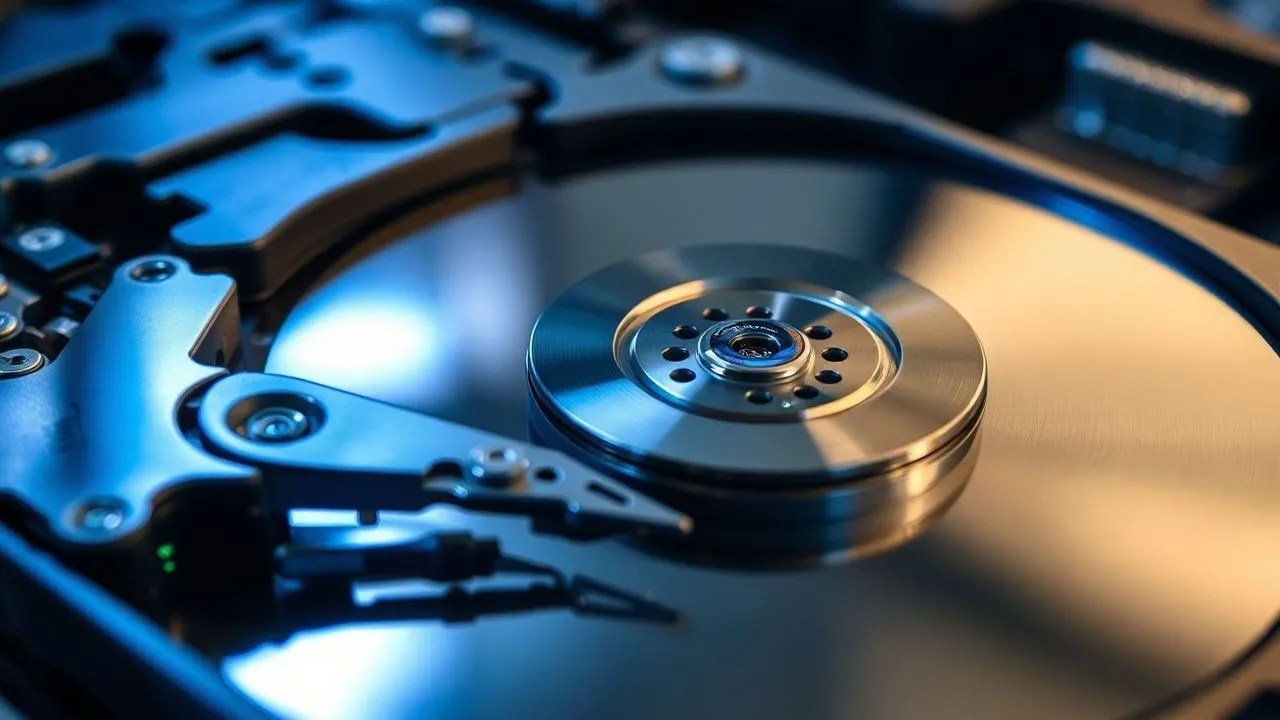
In the technological landscape of 2026, the loss of digital information remains one of the most frustrating challenges for private and professional users. Despite massive cloud storage adoption data recovery hard drive continues to be a primary necessity, since mechanical hard drives and solid-state units still host most of our personal archives, from photo memories to essential work documents. Accidental deletion of a file or involuntary formatting of a partition should not be considered definitive judgments. Thanks to the evolution of deep scanning algorithms, today we have extremely sophisticated tools that can analyze the magnetic or electronic structure of memory supports to reconstruct fragments of apparently lost data. It is essential to understand that, when a file is deleted, the operating system does not immediately erase physical bits from the disk, but merely mark that space as available for new scripts. This subtle technical distinction is the key that allows the success of restoration operations. In this comprehensive guide, we will explore the most advanced methodologies and the most reliable software to deal with every emergency scenario, ensuring the highest chances of success in saving your digital assets on Windows, macOS and Linux.
How it works technically hard drive data recovery
File system logic and data persistence
To understand how it is possible to carry out a deleted file recovery effective, it is necessary to analyze the functioning of modern file systems such as NTFS, APFS or ext4. When we impart the delete command, the computer acts on the disk index, a sort of “summary” which indicates where each file begins and ends. By removing the reference in the index, the file becomes invisible to the user, but the real data remains imprinted on the magnetic plates of the hard disk until it is overwritten by new information. In 2026, the speed of the media increased dramatically, making overwriting a much faster process than the past, especially on active system units that constantly generate temporary files and system logs.
The effectiveness of the recovery process therefore depends almost entirely on the state of integrity of these sectors not yet reused. If you continue to use your computer intensively after data loss, chances of success decrease exponentially every minute you pass. The algorithms of data recovery software work by analyzing the “signature files”, i.e. unique binary sequences that identify the beginning and end of specific file formats, such as JPEG, PDF or MP4. Through this “raw” analysis, the software can reconstruct the entire file even in the absence of the original information provided by the file system, allowing to recover data from damaged or corrupt partitions that the operating system is no longer able to mount correctly.
Differences between mechanical hard drives and SSD drives
A crucial aspect to consider in 2026 concerns the physical nature of support. While in traditional hard drives (HDD) data remains stable until manual or automatic overwriting, in solid-state drives (SSD) enters the TRIM command. This function, designed to optimize flash memory writing performance, orders the disk controller to physically erase data blocks as soon as a file is deleted from the operating system. This makes data recovery on SSD much more complex and often impossible if the operation is not attempted immediately after the accident. However, in case of damaged external units based on SSD technology, if the TRIM command has not been sent or if the controller has suffered a logical failure, there are still significant margins of manoeuvre.
For those who still use mechanical hard drives for mass storage (cold distortion), dynamics are more favorable. Magnetic persistence is remarkable and allows to recover information even after long periods of inactivity, provided that the disk has not suffered physical damage to the plates or reading heads. The distinction between logical recovery (software) and physical recovery (hardware) is clear: while the first can be independently managed with the right data recovery programs, the second requires the intervention of specialized laboratories equipped with a white room. Identifying the nature of the problem correctly is the first fundamental step to avoid worsening the situation with unfair attempts that could lead to the final loss of content.
Best free data recovery programs in 2026
PhotoRec: the definitive open source solution
Although the name can deceive suggesting limited use of images, PhotoRec is one of the tools data recovery hard drive more powerful and versatile available for free. Being an open source software, it benefits from decades of development and a huge file signature library, able to recognize over 480 different extensions. Its main feature is the “unclear approach of the file system”, which allows it to operate on disks where the structure of the partitions has been completely destroyed. In 2026, PhotoRec has greatly improved its graphical interface on Windows (QPhotoRec), making it accessible to those who are not familiar with the command line, while maintaining their technical soul for macOS and Linux users.
Using PhotoRec requires attention in selecting the source drive and destination folder. It is a golden rule of computer security never save the recovered files on the same disk from which you are extracting, to avoid involuntary overwriting of the data still to be analyzed. The scanning process can be long, especially on memory media of large size such as modern 10TB or higher discs, but the meticulousness of the software is often rewarded with finding files that other commercial solutions fail to locate. Its ability to ignore reading errors in bad sectors makes it particularly useful in scenarios where the disk presents the first signs of mechanical or logical failure.
Recuva: simplicity and speed for Windows users
For those looking for an immediate and intuitive solution on Microsoft operating systems, Recuva remains an indispensable reference point. Developed by the same creators of CCleaner, this software stands out for a wizard that accompanies the user step by step in searching for documents, music, videos or emails. One of the strengths of Recuva is its system of colored indicators: after scanning, each file found is marked with a green (recoverable), orange (partially damaged) or red (irrecoverable). This saves valuable time, focusing attention only on the elements that have real chances of returning intact.
In the context of a lost partition, Recuva offers an in-depth scan mode (Deep Scan) that analyzes bits for bits the disk surface. Although this mode takes much more time than standard scanning, it is essential to track deleted files from time to time or to recover data after quick formatting. The free version does not impose quantitative limits on recovery, unlike many modern competitors blocking rescue after a few megabytes. This makes it the ideal choice for domestic emergencies where the speed of execution and gratuitousness are decisive factors for the common user who does not have budgets for expensive professional licenses.
Management of a lost or formatted partition
Recovery after accidental formatting
Formatting a drive is a common event that can occur for a human error while installing an operating system or because of a malware that corrupts the partition table. Fortunately, in most cases it is a “fast training”, an operation that reconstructs only the control structures of the file system leaving intact the underlying data. In this scenario, the data recovery hard drive has success rates close to 100% if you intervene promptly. Software such as EaseUS Data Recovery or Disk Drill are particularly effective in reconstructing the entire hierarchy of original folders, returning not only files to the user, but also their original logical organization.
When faced with a disk that appears as “unlocated space” or which requires formatting before use, it is imperative to resist the temptation to follow the suggestions of the operating system. Each writing operation, including creating a new partition table, is likely to destroy latent data. The correct approach involves the use of “partition recovery” tools that can scan the entire drive to search for old partition headers. Once the old structure is detected, many software can “mount” the partition virtually allowing the file export to a automatic backup outside in total safety, preserving the integrity of the original support.
Advanced tools for restoring complex volumes
For more critical situations, where the file system is severely compromised or you have to deal with RAID configurations, higher level tools such as Lazesoft Data Recovery or specific solutions for macOS are required. These programs are not limited to searching for single files, but try to reconstruct the logic of the whole volume. In 2026, the complexity of storage systems increased with the introduction of dynamic logical volumes and integrated encryption at hardware level. Recovering data from an encrypted volume with BitLocker or FileVault requires that the user has decryption keys, since no recovery software can bypass modern encryption without correct permissions.
- Unplug the hard drive immediately from the system to avoid automatic writes.
- Use a secondary workplace to download the necessary software.
- Always scan in read-only mode to protect data integrity.
- Give priority to recovering smaller and vital documents before attempting with heavy media files.
- Always check the state of health S.M.A.R.T. of the disk during the operation.
In summary, success in recovering from formatted volumes depends on the quality of bit-a-bit scanning. If a program finds nothing, it is worth trying a second, since each scanning engine uses different heuristic algorithms. Patience is the best weapon: the analysis of a modern disc from various terabytes can last hours or even days, but interrupting the process prematurely could mean losing the only opportunity to save your files before a possible mechanical failure latent gets worse.
How to deal with mechanical or physical failure
Symptoms and diagnosis of hardware damage
Not all data loss issues are of a software nature. Often the hard drive stops working due to a mechanical failure inside. Symptoms are usually unequivocal: metallic noises (the so-called “death clic”), intermittent rhinists, excessive vibrations or, at worst, the disc that does not rotate at all. Under these circumstances, the use of any recovery software is not only useless, but is extremely dangerous. Whenever you try to feed a disk with damaged heads, they could get in physical contact with magnetic plates, scratching them and permanently destroying data in a dust of irrecoverable ferrous fragments.
If you suspect physical damage, the golden rule of 2026 is: turn it off. A disk that is recognized intermittently by the BIOS or that causes the computer freeze as soon as it is connected is a clear signal of hardware instability. In these cases, diagnosis must be rapid and definitive. Never attempt the infamous “grandmother’s methods” how to freeze the disk, since the condensation that would be formed inside the ignition would cause an immediate short circuit or detachment of sensitive components. Current hard disk technology has tolerances in the order of nanometers, which makes any non-professional DIY intervention an unacceptable risk for value data.
The intervention of the professional white room
When the data has an invaluable economic or affective value and the damage is physical, the only feasible solution is to apply to a professional recovery center with a white room (Clean Room). These laboratories operate in controlled atmosphere environments, where the powder is almost totally absent, allowing technicians to open the drive and replace internal components such as the heads group or the engine of the dishes. In 2026, these services became more accessible, but still remain expensive due to the complexity of operations and the need to find compatible “donors” or identical disks from which to pick up spare parts.
- Preliminary analysis to determine the extent of physical damage.
- White chamber replacement of worn or broken mechanical components.
- Creation of an image "specchio" sector by sector of the original disk.
- Logic data recovery from created image, avoiding stressing repaired original media.
- Delivery of recovered data on a new secure and certified memory support.
Although the cost can vary from a few hundred to several thousand euros, the professionalism of these centers guarantees the maximum possible percentage of success. It is important to choose companies that offer the policy “No Data, No Fee”, or payment of the service only in case of actual recovery of the desired files. This approach protects the user from unnecessary expenses and ensures that the lab is committed to solving the problem, using forensic tools that go far beyond the capabilities of any data recovery software commercial available on the consumer market.
Data recovery from damaged external drives and mobile devices
USB flash drive reset and SD cards
The damaged external units, like USB pendrives and SD/MicroSD cards, present unique challenges. Unlike hard drives, these flash memories do not have mobile parts, but are subject to wear of writing cycles and electronic controller failures. When a USB stick is suddenly “unreadable”, the problem could reside in the corrupt file system or in a physical damage of the connector. Software like Wise Data Recovery or Disk Drill are excellent in managing these memories, often managing to extract photos and videos even when the device looks completely empty or asks to be initialized.
In 2026, the memory density of a MicroSD can reach the 2TB, making the loss of one of these cards a real disaster for photographers and videomakers. The recovery procedure always begins with writing protection: many adapters have a physical lever to prevent the computer from writing data on the card. Once protected, we proceed with a deep scan. If the problem is the controller, there are advanced techniques such as the “Chip-off”, which provides for dewatering of the memory chip and direct reading of data through specialized hardware, a complex procedure that however represents the last beach to recover vital content from physically compromised flash memory.
Software and cloud integration in the recovery process
A consolidated trend in 2026 is the integration between recovery tools and cloud storage services. Many modern programs allow you to upload the recovered files directly to spaces like Google Drive, Dropbox or secure FTP servers during the process itself. This not only speeds up work, but ensures that saved data is immediately protected by an additional automatic backup. In addition, some services offer the possibility to analyze the “previous versions” of files saved in the cloud, which may have escaped local deletion, offering an alternative and often faster recovery way than scanning the physical disk.
Data recovery is a race against time and against physics: each overwritten bit is a fragment of history that disappears forever. Prevention remains the only infallible medicine, but today's technology offers us incredibly robust lifeboats.
Using solutions such as EaseUS or Disk Drill on mobile devices connected to the computer (smartphone or tablet) often requires root permissions or activation of USB debugging mode. Although more complex, the data recovery hard drive virtual of these devices follows logic similar to traditional media. The key is always the same: act quickly and do not install new applications on the device concerned, since the installation itself could occupy just those areas where the data we are desperately trying to save.
Prevention and maintenance strategies in 2026
The importance of the 3-2-1 backup rule
Despite the effectiveness of software data recovery hard drive, the best strategy always remains prevention. In 2026, the 3-2-1 rule is still the gold standard of computer security: maintain at least 3 copies of data, on 2 different media, with 1 preserved off-site copy (out of home or office, usually in cloud). Implementing an automatic backup system drastically reduces stress and risks related to sudden failures or ransomware attacks, which encrypt data making useless any traditional recovery software if you do not have unlock keys.
Configure a home NAS (Network Attached Storage) with RAID redundancy can protect you from physical breakup of a single disk, allowing replacement of fault support without any loss of information. However, it is good to remember that the RAID is not a backup: if you delete a file by mistake, the deletion is replicated instantly on all disks of the system. For this reason, a combination of local snapshots and cloud synchronization remains the most complete defense against any kind of logical or physical unexpected that can affect our precious digital archives.
Disk health monitoring with S.M.A.R.T.
Preventing mechanical failure it is possible thanks to the S.M.A.R.T. technology (Self-Monitoring, Analysis, and Reporting Technology) integrated into almost all modern discs. There are free utilities that read these parameters and alert the user months before the disk actually stops working. Indicators such as the number of reallocated sectors, operating temperature and search errors are premonitory signals that should never be ignored. If a monitoring software reports a state of health “Caution” or “Warning”, it is time to immediately clone the entire content on a new drive before the integrity of data is compromised.
- Weekly monitoring S.M.A.R.T. of your main drive.
- Avoid shocks and vibrations while the mechanical hard disk is in operation.
- Maintain adequate ventilation to prevent heat degradation.
- Use continuity groups (UPS) to protect discs from sudden voltage surges and shutdowns.
- Firstly replace the hard drives that have exceeded the 5 years of continuous activity.
Finally, the choice of memory media is fundamental. In 2026, opting for “Enterprise” or NAS-specific units for their archives ensures greater longevity and higher resistance to intense workloads. Investing in quality hardware and in a solid backup strategy is much cheaper and less stressful than having to deal with a complex emergency data recovery intervention, whether it is managed via free software or through expensive professional laboratories.
Frequently Asked Questions about Data Recovery
Is it really possible to recover files after emptying the trash?
Can I recover data from a hard disk that makes noise?
If a hard disk emits metallic noise, humming or ticking, it means that the internal mechanical components, probably the reading heads, are physically damaged. In this specific case, the use of recovery software is not recommended because it could cause irreversible scratches on magnetic plates. The only safe option to recover data is to apply to a specialized company with a white room, which can operate on the disk without further feeding it improperly.
How long does a full data recovery scan take?
The duration of a scan for data recovery hard drive depends mainly on the size of the drive and the speed of the connection (USB 3.0, USB-C, SATA). For a 2TB modern disk, a deep scan can take from 4 to 12 hours. If the disk has bad sectors, the process could slow down further as the software will try to read data from problematic blocks several times. It is essential to never interrupt the process once it is started.
Are free software safe or risk of getting worse?
Reliable data recovery programs such as those mentioned in this guide are safe because they operate in “read only” mode, or write nothing on the source disk. The main risk does not come from the software itself, but from the user who could install it on the wrong drive or save the recovered files on the same partition. As long as you use an external position and do not write on the damaged drive, the use of free tools is a first correct and risk-free step.
Does data recovery work even if the disk is encrypted?
Yes, you can also recover from encrypted drives, provided you know the password or have the reset key. Many professional software ask you to insert decryption credentials before you start scanning. If the key is lost and the disk is protected by modern encryption (AES-256), data recovery is technically impossible, since the extracted bits would result in a random sequence without logical meaning.
In conclusion, addressing the loss of digital information requires a methodical and rational approach. As we have seen, the technologies of data recovery hard drive available in 2026 offer powerful solutions for both the common user and the professional, allowing to remedy errors that once would have been fatal. However, the awareness that no software is infallible must push us towards a culture of constant prevention. Protecting your data with regular backups and monitoring the health of your memory media remains the best investment you can make for your digital serenity. If you are in an emergency situation, follow the illustrated steps, carefully choose the most suitable tool for your case and act with maximum caution. The recovery of your files is within the reach of the click: the rescue of your precious data starts immediately.


